
California Designer Adds Green to Cool, Comfy and Chic Interiors
- Aug 10, 2022
- 4 min read
Updated: Apr 20, 2023
To build a sustainable future for families, interior designers play a key role in communicating the need for materials and spaces that blend with nature while reducing waste and further harm to our environment. The global market for interior design services is projected to grow to a whopping $255 billion by 2027. Factors driving the trend include construction activities, improvements in the standard of living, and rising incomes of people.

Krosskeys spoke to Joani Stewart, an interior designer in Marina del Rey, California, who has been guiding the taste of Southern Californians for the past 30 years. She has a well-trained eye for atmospheric interiors as evident in the design of her modular two-bedroom condo looking over the glistening Pacific coast. Clients hire her for subtlety, sustainability, and sophistication. From a quick makeover to a full remodel, her portfolio ranges from interior to outdoor living spaces.
She prefers clean lines and geometric decor, with a playful touch of curves and colors to complete the aesthetic look of her projects. Her best works have been featured in the "Designer Showcase" book that offers an exceptional tour of over 150 showhouse rooms, from Pasadena, California, to Kips Bay, New York. She has crafted the interiors of some high-profile clients like the president of Lionsgate films, the Vice President of Herbalife, actresses, Lily Tomlin and Shelley Long, writers and artists, and doctors in the community.
In recent years, Joani has been focusing on minimalist and contemporary interiors, ensuring every element has a purpose in her designs. This approach is refreshing in our modern society, which is characterized by a culture of excessive consumerism, where people are encouraged to consume more goods and services than they need or can afford. Joani said: “I feel fewer things mean less need to extract, process, manufacture, transport, and install materials. It's important to be conscious of our consumption habits and try to find a balance that works best." Here are four ways to making a difference for the environment:


1. Natural Ventilation. Her philosophy on designing a thoughtful environment begins with nature. Inside her living room, a light and airy Zen oasis, Joani has an abundance of natural light and ventilation streaming in to save energy. The versatile white walls offer a blank canvas to balance the burst of colors of the California sky that can take on a range of hues, from deep oranges and reds to pink and purple. When choosing colors for a space, she says some types of paint can release Volatile Organic Compounds (VOCs) into the air, which can negatively impact indoor air quality. To avoid these pollutants, she recommends paints that are made from natural, sustainable ingredients such as plant-based, mineral, or clay-based paint. They are not only low-VOC but also biodegradable and made from natural ingredients, which makes them a better option. To further enhance air quality, Joani uses plants to remove pollutants from the air and create an atmosphere to improve overall well-being.


2. Buy Durable Lights. She uses LED lights and dimmers at the right spots. These lights are long-lasting compared to traditional incandescent lights, typically lasting for 25,000 to 50,000 hours or more. This means they need to be replaced less often, which can save money and reduce waste. LED lights also emit less heat and contain no toxic materials, and when they reach the end of life, they can be recycled unlike traditional bulbs.
3. Invest in Efficient Stove. In the kitchen, Joani cooks over a four-burner induction cooktop, which is becoming increasingly popular because of its safety and durability features. Unlike gas stoves, the heat in induction cooktops is transferred directly to the pot or pan and not to the surrounding area, resulting in faster and more efficient cooking. Because of its smooth surface, the induction cooktop is easy to wipe down and clean. It uses less energy than traditional gas or electric cooktops, which can help people save money on utility bills over time.


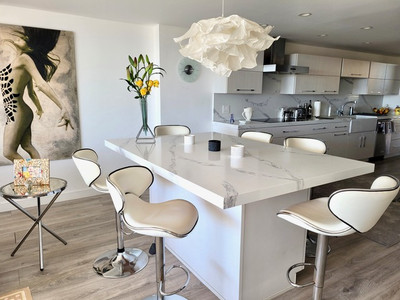
Across the United States, about 38% of households use natural gas for cooking, according to the 2020 Census data from the U.S. Energy Information Administration. In California, about 60% to 70% of homes cook with gas. Those interested in shifting to energy-efficient induction cooktops, may be eligible for rebates through various programs and initiatives laid out in the Inflation Reduction Act. A discount of up to $840 is available on the purchase of a new electric stove, cooktop, range or oven. The new legislation also provide rebates on appliances like clothes dryers and water heaters.
4. Recycle and Repurpose. From time to time, this California trendsetter also donates used furniture to Habitat for Humanity and other socially responsible organizations to keep items out of our landfills, and allow them to be purchased and live another life. Reusing and recycling are integral to a circular economy that creates sustainability for families by reducing waste. The choices that Joani has made in her home minimize negative impacts on the environment, create spaces that work smarter and more efficiently, and make the most of natural resources. The actions she recommends now to make sustainable modifications in designs will directly shape our homes tomorrow. For more ideas, check out her website www.joanistewartinteriors.com
Krosskeys Communications LLC is a woman-and-minority-owned small business in the United States that provides digital marketing, content writing, and public and media relations to raise awareness of environmentally-friendly products and services that inspire action to protect our planet. For more information, go to www.kross-keys.com.


Comments